

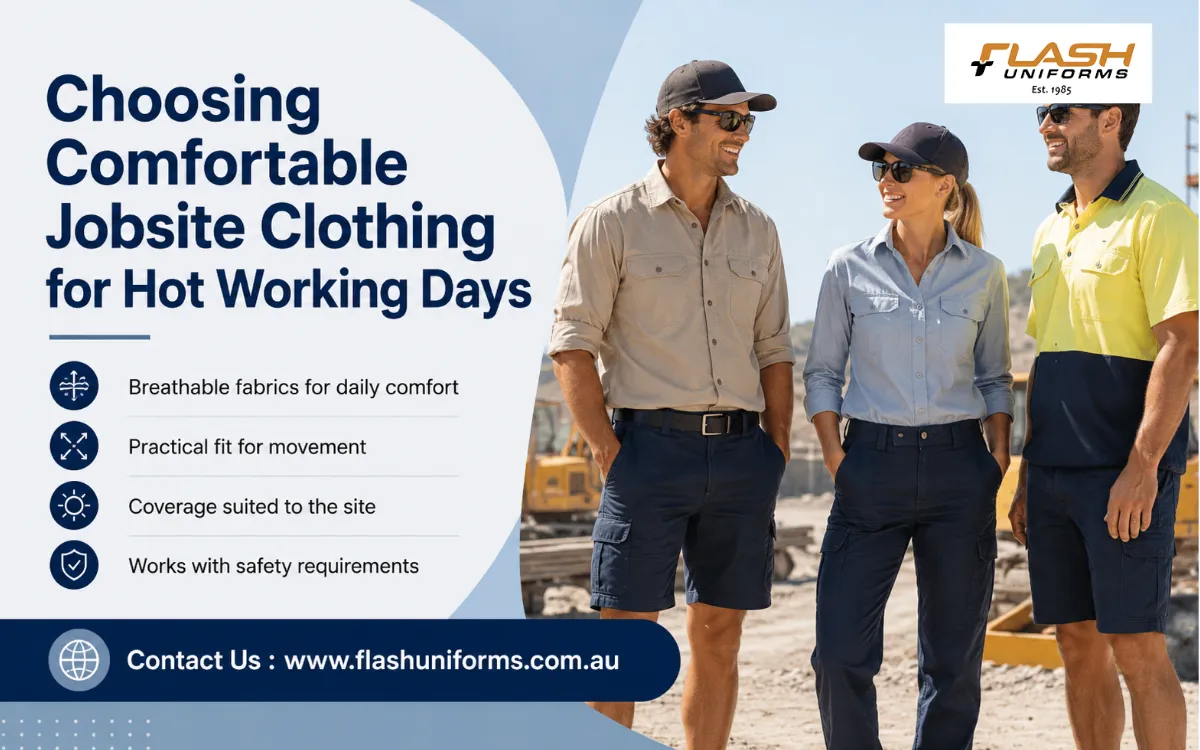
Working through hot conditions can make even routine physical tasks more demanding. Employees who spend long periods outdoors, in workshops, on construction sites or moving between indoor and outdoor areas need clothing that supports movement while remaining practical for the job. Selecting suitable workwear attire for warm conditions requires a balance of comfort, coverage, durability and workplace requirements.
The goal is not simply to choose the lightest garment available. Clothing still needs to suit the employee’s tasks, provide an appropriate professional appearance and meet any site-specific safety requirements. A carefully planned warm-weather wardrobe can make daily work more manageable while helping teams maintain a consistent company presentation.
Begin With the Actual Working Conditions
Hot weather does not affect every job in the same way.
An employee working outdoors in direct sun experiences different conditions from someone working inside a warehouse with limited airflow. A technician may spend much of the day driving between jobs, while a landscaper may remain physically active outdoors for hours.
Before choosing clothing, consider:
-
Whether employees work in direct sunlight
-
How physically active the role is
-
Indoor ventilation
-
Humidity
-
Exposure to dust or dirt
-
Workplace safety requirements
-
Time spent driving
-
Need for tools or equipment storage
Understanding the actual environment helps businesses avoid making decisions based only on seasonal temperature.
Look for Breathable Fabric Options
Fabric can strongly influence how clothing feels during a long shift.
Heavy materials may feel durable but can become uncomfortable when employees are continuously moving in hot conditions. More breathable fabrics may help improve everyday comfort where they remain suitable for the work.
Consider Fabric Weight
Fabric weight should be matched to the role.
A lighter garment can be useful for employees performing active work, while some roles may still require stronger materials because of repeated contact with equipment or rough surfaces.
Rather than automatically choosing the lowest fabric weight, consider the balance between:
-
Airflow
-
Durability
-
Coverage
-
Flexibility
-
Washing requirements
-
Expected garment lifespan
A garment that needs replacing constantly may not offer good value even if it initially feels comfortable.
Make Movement a Priority
Hot-weather discomfort can become worse when clothing restricts natural movement.
Employees may repeatedly bend, squat, climb, reach or walk throughout their shifts. Clothing should allow these movements without excessive pulling around the shoulders, waist or thighs.
Look for designs that provide enough room through key movement areas while still maintaining a tidy workplace appearance.
Check the Garment in Working Positions
When testing clothing, employees should not only stand upright.
Ask them to:
-
Sit
-
Bend
-
Squat
-
Reach overhead
-
Walk
-
Step onto a raised surface
-
Simulate common job movements
This can reveal fit problems that may not be noticeable during a basic fitting.
Decide When Shorts Are Appropriate
For many warm-weather workplaces, workwear shorts can provide a practical alternative to full-length pants where the job, workplace policy and site conditions allow them.
Shorts can improve airflow around the legs and may feel less restrictive during active work, but they are not suitable for every task.
Consider the Work Environment First
Before introducing shorts, consider whether employees:
-
Work around sharp materials
-
Frequently kneel
-
Need lower-leg coverage
-
Work in areas with specific dress requirements
-
Move between different sites
-
Require specialised protective clothing
Where shorts are suitable, choosing a practical cut with useful storage can support both comfort and everyday function.
Think Carefully About Pocket Design
Workers often carry phones, pens, measuring equipment, fasteners or small tools.
Pocket design therefore matters more than it might in ordinary casual clothing.
However, more pockets are not always better.
Large or heavily loaded pockets can make shorts uncomfortable, particularly when employees are constantly walking or climbing.
Choose storage based on the actual role.
For example:
Mobile technicians may need secure phone and utility pockets.
Warehouse employees may only require a simple pocket arrangement.
Tradespeople may benefit from more specialised storage.
Matching pocket design to daily tasks helps avoid unnecessary bulk.
Pair Shorts With Suitable Shirts
Lower-body clothing is only one part of a warm-weather wardrobe.
Shirts and polos should also be selected for the environment.
Consider:
-
Fabric breathability
-
Sleeve length
-
Collar design
-
Fit
-
Moisture management
-
Workplace visibility requirements
-
Branding position
Some employees may prefer long sleeves for additional coverage even during warm conditions, while others may use short-sleeve garments where appropriate.
The overall outfit should work as a system.
Prepare for Temperature Changes During the Day
A hot afternoon does not necessarily mean the entire shift will be warm.
Employees working early mornings or evenings may experience substantial temperature changes.
A practical uniform system allows employees to add or remove layers as conditions change.
Useful additional garments can include:
-
Lightweight jumpers
-
Vests
-
Softshell jackets
-
Weather-resistant outer layers
-
Hoodies where suitable
The aim is to avoid forcing employees to choose between being too cold early in the morning or carrying an unnecessarily heavy garment all afternoon.
Do Not Forget Sun and Site Requirements
Outdoor work may involve additional clothing considerations beyond comfort.
Businesses should consider their workplace health and safety obligations and any applicable standards when deciding what employees should wear.
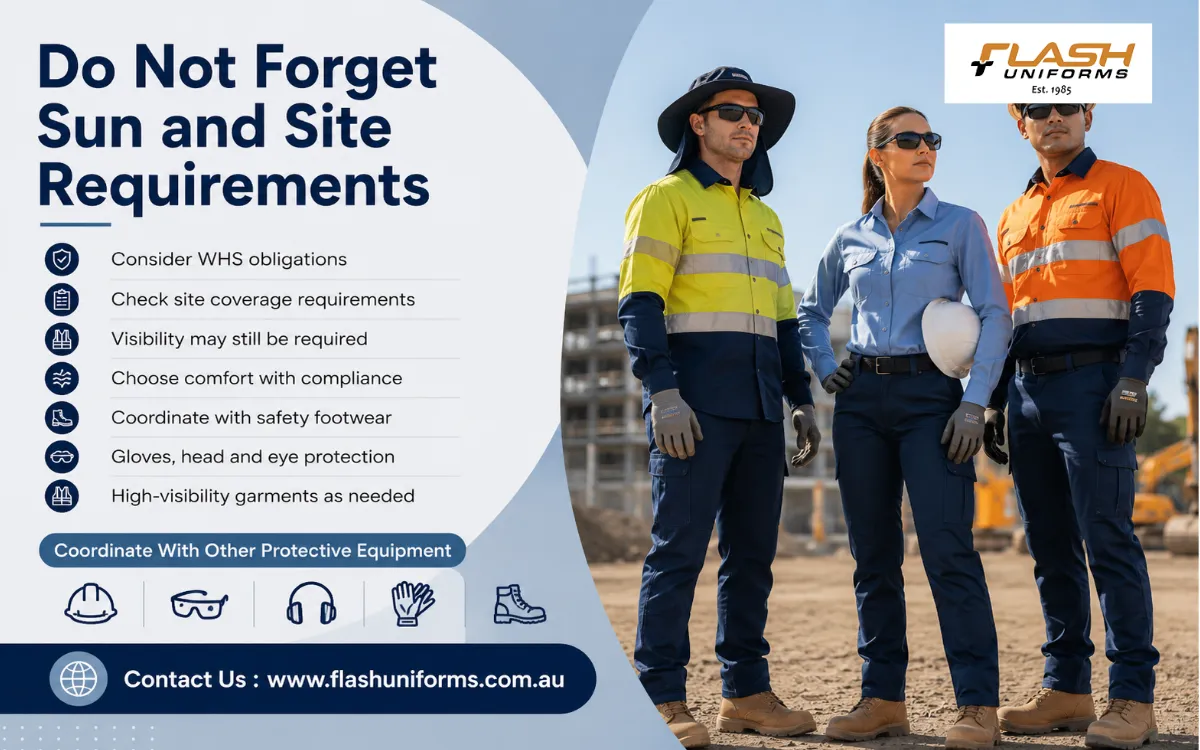
Some sites may require particular levels of coverage or visibility regardless of temperature.
This is why warm-weather clothing should never be selected based purely on comfort.
Coordinate With Other Protective Equipment
Clothing may need to work alongside:
-
Safety footwear
-
Gloves
-
Head protection
-
Protective eyewear
-
High-visibility garments
-
Other role-specific equipment
A shirt or pair of shorts that feels comfortable on its own should also remain practical when used with required equipment.
Provide More Than One Daily Option
Employees working in warm conditions may need clothing changed more frequently because of sweat, dust and physical activity.
Providing enough garments for rotation helps employees start each shift with suitable clothing while reducing pressure on washing schedules.
A practical wardrobe could contain:
-
Several shirts or polos
-
Multiple pairs of shorts or pants
-
A lightweight layer
-
A jacket
-
Additional role-specific garments
Having both shorts and pants available can also help employees adjust to different jobs and sites.
Keep the Team Appearance Professional
Comfortable clothing does not need to look casual or inconsistent.
Businesses can maintain a coordinated appearance by using consistent colours, garment families and branding.
For example, staff may wear the same branded polo with either shorts or pants depending on conditions.
This provides flexibility without losing visual consistency.
Keep Branding Simple
A small embroidered or printed company logo can create clear identification without overwhelming the garment.
Consider placing branding where it remains visible but does not interfere with pockets, seams or functional garment areas.
Consistent logo size and position across multiple garments can make the whole clothing program appear more organised.
Ask Employees What Works
Employees can provide practical feedback that purchasing managers may not immediately notice.
Before placing a large order, ask several team members to test clothing during normal tasks.
Questions might include:
-
Is the fabric comfortable after several hours?
-
Does the waistband remain comfortable when bending?
-
Are pockets easy to access?
-
Does the garment restrict movement?
-
Is the sizing accurate?
-
Does the clothing wash well?
This feedback can help businesses refine their selection before rolling it out across the entire team.
Why Choose Flash Uniforms?
Flash Uniforms provides Australian businesses with a broad range of practical clothing options for trades, construction teams, service businesses and other active workplaces. Businesses can explore shirts, shorts, pants, jackets and additional garments suited to different working conditions, making it easier to build a complete team wardrobe from one supplier. With options for different roles, climates and professional presentation needs, Flash Uniforms can help organisations create clothing programs that balance everyday comfort, practicality and a coordinated business appearance.
Build a Warm-Weather Wardrobe Around the Job
Choosing clothing for hot working days should begin with the job itself.
Consider the employee’s movements, the level of physical activity, the environment, workplace requirements and the need for storage before focusing on style.
Shorts, lightweight shirts and breathable garments can provide useful options when they are appropriate for the workplace, but they should form part of a broader clothing system that also includes pants and layers for changing conditions.
By planning clothing around real working conditions rather than simply choosing the lightest option available, businesses can create a more practical wardrobe that employees are comfortable wearing throughout demanding warm-weather shifts.